
.webp)
Business Technology News Roundup: Jan 30, 2026
From Elon Musk’s massive SpaceX-xAI merger talks to a record-breaking 31.4 Tbps DDoS attack, here’s everything you missed in tech from Jan 26–30, 2026.
If you felt like the tech world moved at double speed last week, you’re not imagining it. We’ve officially entered an era where "million-dollar" conversations have turned into "billion-dollar" ones. Last week, the industry shifted gears from simple software updates to massive infrastructure plays, orbital AI, and valuations that defy gravity.
From Elon Musk’s latest attempt to consolidate his empire to a cybersecurity attack that quite literally broke the internet's speed record, here are the five stories you need to know to stay ahead.
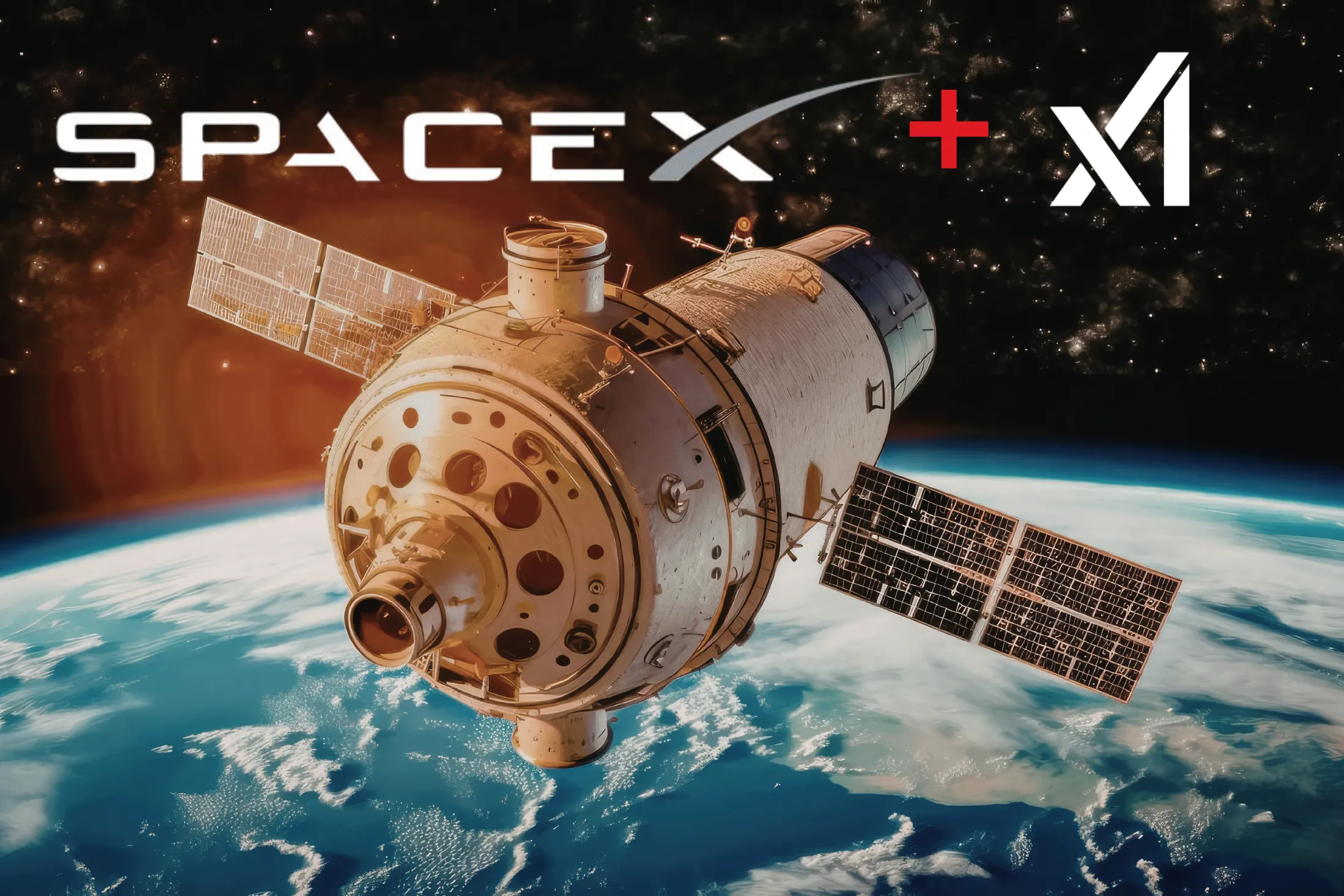
The biggest story of the week, and potentially the decade, is that SpaceX and xAI are in formal merger talks. Elon Musk effectively confirmed the rumors on X with a characteristically blunt "Yeah" in response to reports about the deal.
SpaceX (currently valued at $800 billion) and xAI (valued at $230 billion) are exploring a stock swap that would bring them under a single corporate umbrella. Nevada state filings from January 21 show the creation of two new entities managed by SpaceX CFO Bret Johnsen, which experts believe are the legal "buckets" for this transaction.
This isn't just a financial maneuver; it’s a bid to create a "Dyson Swarm" company. The vision is to use SpaceX’s Starlink satellite constellation as a global, space-based supercomputer to host xAI’s "Grok" intelligence. By moving the "brain" of AI into orbit, Musk aims to bypass terrestrial power constraints and provide low-latency AI services anywhere on Earth. With a SpaceX IPO rumored for later in 2026, this merger would create a trillion-dollar powerhouse that is virtually impossible for competitors to replicate.
While OpenAI usually hogs the headlines, Anthropic just proved that the hunger for "safe" AI is bigger than ever. They reportedly doubled their latest funding target mid-round, closing at a $350 billion valuation.
This massive $20 billion injection of cash was led by Sequoia Capital, with major participation from Singapore’s sovereign wealth fund (GIC) and Coatue. This is a jaw-dropping jump from their $183 billion valuation just four months ago.
What’s driving this frenzy? It’s two-fold: the successful commercialization of "Claude Code", a tool that has become the gold standard for AI-assisted programming, and the company's reputation for "Constitutional AI" (AI with a built-in moral compass). Investors are flocking to Anthropic as the "stable" alternative to OpenAI’s more aggressive, research-first culture. This valuation places Anthropic among the top 20 most valuable entities on the planet, private or public, signaling that the "AI bubble" isn't bursting, it’s just getting more expensive to join the race.

On the security front, we saw a terrifying milestone. A botnet known as Aisuru (or Kimwolf) launched a record-breaking DDoS attack that peaked at 31.4 terabits per second.
Cloudflare, which mitigated the attack, named the campaign "The Night Before Christmas." The attack reached a hyper-volumetric rate of 200 million requests per second, primarily targeting telecommunications providers.
The most alarming part? The power didn't just come from compromised industrial servers. A massive portion of the traffic was traced back to Android TVs and streaming boxes. This highlights a growing trend in 2026: "Living Room Warfare." Hackers are exploiting the lax security of smart home devices which are rarely updated and always connected to build digital armies. If you haven't checked your router or smart TV settings lately, this is your wake-up call that your Netflix box might be a soldier in a global cyberattack.

In a move straight out of science fiction, Alibaba’s Qwen-3 model became the world’s first general-purpose AI to run full inference tasks entirely in orbit.
Working with the aerospace startup Adaspace, Alibaba successfully deployed the model to an orbital computing center consisting of a 12-satellite constellation. In a successful test on January 27, queries were sent from Earth, processed entirely by the AI on the satellite, and the results were returned in less than two minutes.
This is a game-changer. Traditionally, satellites are "dumb" sensors that send raw data back to Earth for humans (or ground-based AI) to analyze. By putting the "brain" on the satellite itself, Alibaba can process Earth-observation imagery or disaster response data in real-time. It’s the first step toward a 2,800-satellite "Star-Compute" network planned for 2035, which could provide AI services to autonomous drones and robots globally without ever needing a ground-based server.

If you’re a developer, it’s time to audit your plugins. Security researchers flagged a campaign dubbed "MaliciousCorgi," involving two popular VS Code extensions that have been harvesting source code from over 1.5 million users.
The extensions, "ChatGPT - 中文版" and "Chat-Moss," appear to be legitimate, functional AI assistants. They offer great autocomplete and debugging features, which is exactly how they stayed undetected for so long. However, hidden under the hood is a spyware infrastructure that triggers every time you open a file.
Unlike normal extensions that only read the snippet you're working on, MaliciousCorgi encodes entire files and sends them to servers in China. It even features a "remote harvest" command where the attacker can trigger the extension to steal 50 files from your workspace at once without any visual indication. It’s a sobering reminder that as we rush to add AI "helpers" to our workflow, we are essentially inviting a stranger to sit behind us and watch every keystroke. If you use VS Code, check your extensions list immediately.
While OpenAI usually hogs the headlines, Anthropic just proved that the hunger for "safe" AI is bigger than ever. They reportedly doubled their latest funding target mid-round, closing at a $350 billion valuation.
This massive $20 billion injection of cash was led by Sequoia Capital, with major participation from Singapore’s sovereign wealth fund (GIC) and Coatue. This is a jaw-dropping jump from their $183 billion valuation just four months ago.
What’s driving this frenzy? It’s two-fold: the successful commercialization of "Claude Code", a tool that has become the gold standard for AI-assisted programming, and the company's reputation for "Constitutional AI" (AI with a built-in moral compass). Investors are flocking to Anthropic as the "stable" alternative to OpenAI’s more aggressive, research-first culture. This valuation places Anthropic among the top 20 most valuable entities on the planet, private or public, signaling that the "AI bubble" isn't bursting, it’s just getting more expensive to join the race.
On the security front, we saw a terrifying milestone. A botnet known as Aisuru (or Kimwolf) launched a record-breaking DDoS attack that peaked at 31.4 terabits per second.
Cloudflare, which mitigated the attack, named the campaign "The Night Before Christmas." The attack reached a hyper-volumetric rate of 200 million requests per second, primarily targeting telecommunications providers.
The most alarming part? The power didn't just come from compromised industrial servers. A massive portion of the traffic was traced back to Android TVs and streaming boxes. This highlights a growing trend in 2026: "Living Room Warfare." Hackers are exploiting the lax security of smart home devices which are rarely updated and always connected to build digital armies. If you haven't checked your router or smart TV settings lately, this is your wake-up call that your Netflix box might be a soldier in a global cyberattack.
In a move straight out of science fiction, Alibaba’s Qwen-3 model became the world’s first general-purpose AI to run full inference tasks entirely in orbit.
Working with the aerospace startup Adaspace, Alibaba successfully deployed the model to an orbital computing center consisting of a 12-satellite constellation. In a successful test on January 27, queries were sent from Earth, processed entirely by the AI on the satellite, and the results were returned in less than two minutes.
This is a game-changer. Traditionally, satellites are "dumb" sensors that send raw data back to Earth for humans (or ground-based AI) to analyze. By putting the "brain" on the satellite itself, Alibaba can process Earth-observation imagery or disaster response data in real-time. It’s the first step toward a 2,800-satellite "Star-Compute" network planned for 2035, which could provide AI services to autonomous drones and robots globally without ever needing a ground-based server.
If you’re a developer, it’s time to audit your plugins. Security researchers flagged a campaign dubbed "MaliciousCorgi," involving two popular VS Code extensions that have been harvesting source code from over 1.5 million users.
The extensions, "ChatGPT - 中文版" and "Chat-Moss," appear to be legitimate, functional AI assistants. They offer great autocomplete and debugging features, which is exactly how they stayed undetected for so long. However, hidden under the hood is a spyware infrastructure that triggers every time you open a file.
Unlike normal extensions that only read the snippet you're working on, MaliciousCorgi encodes entire files and sends them to servers in China. It even features a "remote harvest" command where the attacker can trigger the extension to steal 50 files from your workspace at once without any visual indication. It’s a sobering reminder that as we rush to add AI "helpers" to our workflow, we are essentially inviting a stranger to sit behind us and watch every keystroke. If you use VS Code, check your extensions list immediately.
The biggest story of the week, and potentially the decade, is that SpaceX and xAI are in formal merger talks. Elon Musk effectively confirmed the rumors on X with a characteristically blunt "Yeah" in response to reports about the deal.
SpaceX (currently valued at $800 billion) and xAI (valued at $230 billion) are exploring a stock swap that would bring them under a single corporate umbrella. Nevada state filings from January 21 show the creation of two new entities managed by SpaceX CFO Bret Johnsen, which experts believe are the legal "buckets" for this transaction.
This isn't just a financial maneuver; it’s a bid to create a "Dyson Swarm" company. The vision is to use SpaceX’s Starlink satellite constellation as a global, space-based supercomputer to host xAI’s "Grok" intelligence. By moving the "brain" of AI into orbit, Musk aims to bypass terrestrial power constraints and provide low-latency AI services anywhere on Earth. With a SpaceX IPO rumored for later in 2026, this merger would create a trillion-dollar powerhouse that is virtually impossible for competitors to replicate.
Stay Connected: Follow NDIT Solutions on LinkedIn, for more insights and updates.
Need Expert IT Guidance? Our team of experienced consultants is here to help your business navigate the complex world of IT. Contact us today at info@nditsolutions.com or call 877-613-8787 to learn how we can support your technology needs.


