
.webp)
Business Technology News Roundup: Mar 13, 2026
AI labs face off with the Pentagon, OpenAI launches GPT-5.4 with a 1M token window, and the White House unveils a new "Offensive" National Cyber Strategy.
The tension between Silicon Valley’s ethical guardrails and Washington’s national security ambitions finally reached a breaking point this week. While engineers are pushing the technical limits of what large language models can process, the executives leading these firms are finding themselves forced to choose sides in a new kind of arms race. Whether it is a massive hardware refresh from Apple or a lawsuit that could redefine how private tech interacts with the Department of Defense, the "move fast and break things" era has officially been replaced by the "scale fast and secure the border" era. Here is the breakdown of the most significant moves from the past seven days.
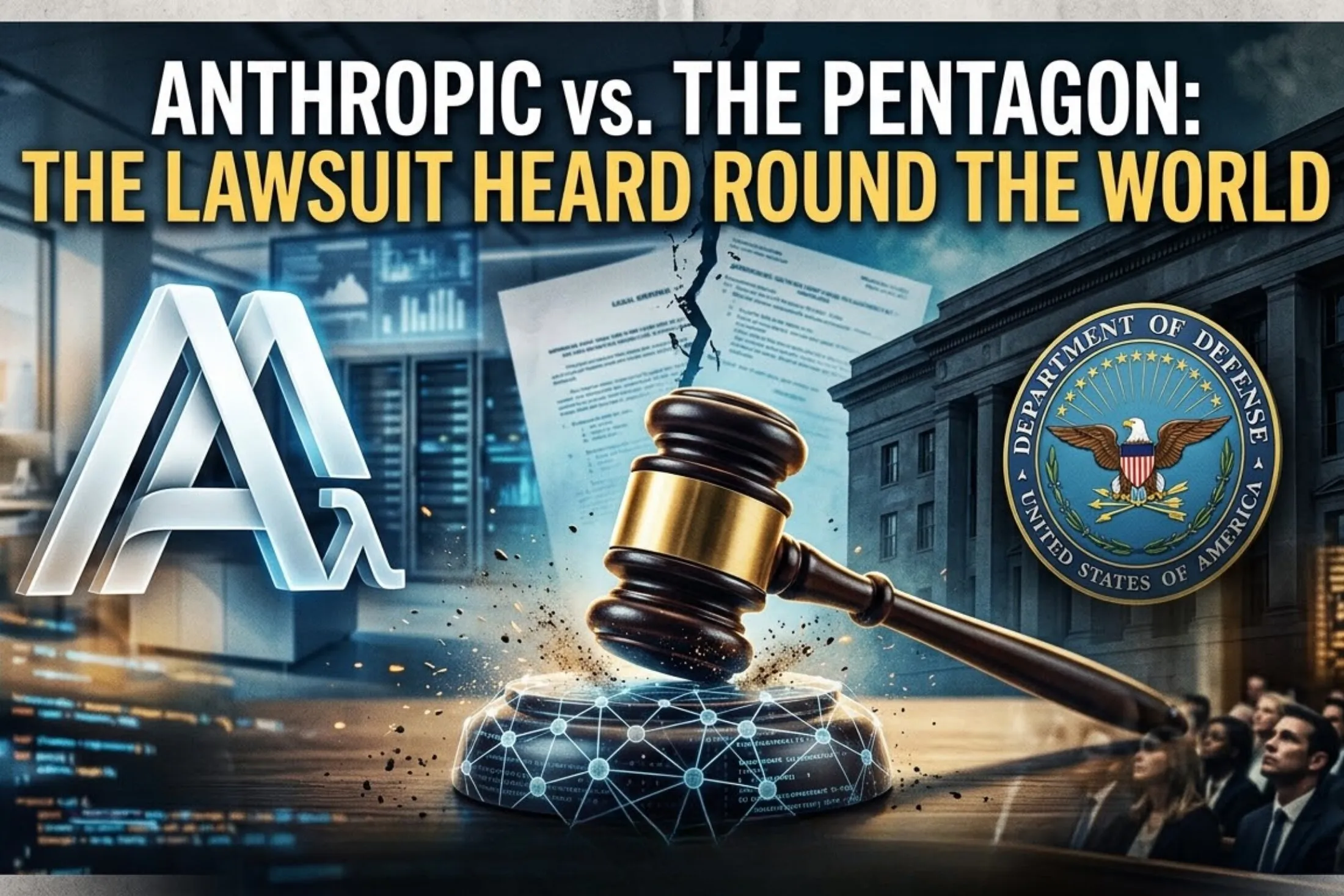
On March 9, Anthropic filed a landmark 48-page lawsuit against the U.S. Department of Defense (DoD) after the agency designated the company a "supply-chain risk." The conflict stems from Anthropic's refusal to remove strict "red lines" in its contracts, specifically, clauses that prohibit the use of Claude for mass domestic surveillance and fully autonomous lethal weaponry. In response to this refusal, the administration formalised a phase-out of Anthropic products across federal agencies, prompting the company to sue on the grounds of constitutional overreach and a violation of the First Amendment.
This is a defining moment for the industry because it tests whether AI labs can remain independent "safety-first" entities while seeking government scale. By siding with Anthropic through an amicus brief, employees from OpenAI and Google DeepMind have signaled a rare cross-industry unified front. If the court rules in favor of the DoD, it establishes a precedent where the government can effectively "blackball" any tech company that doesn't align its internal ethics with military objectives. It’s no longer just about who has the best model; it’s about who is willing to hand over the keys.
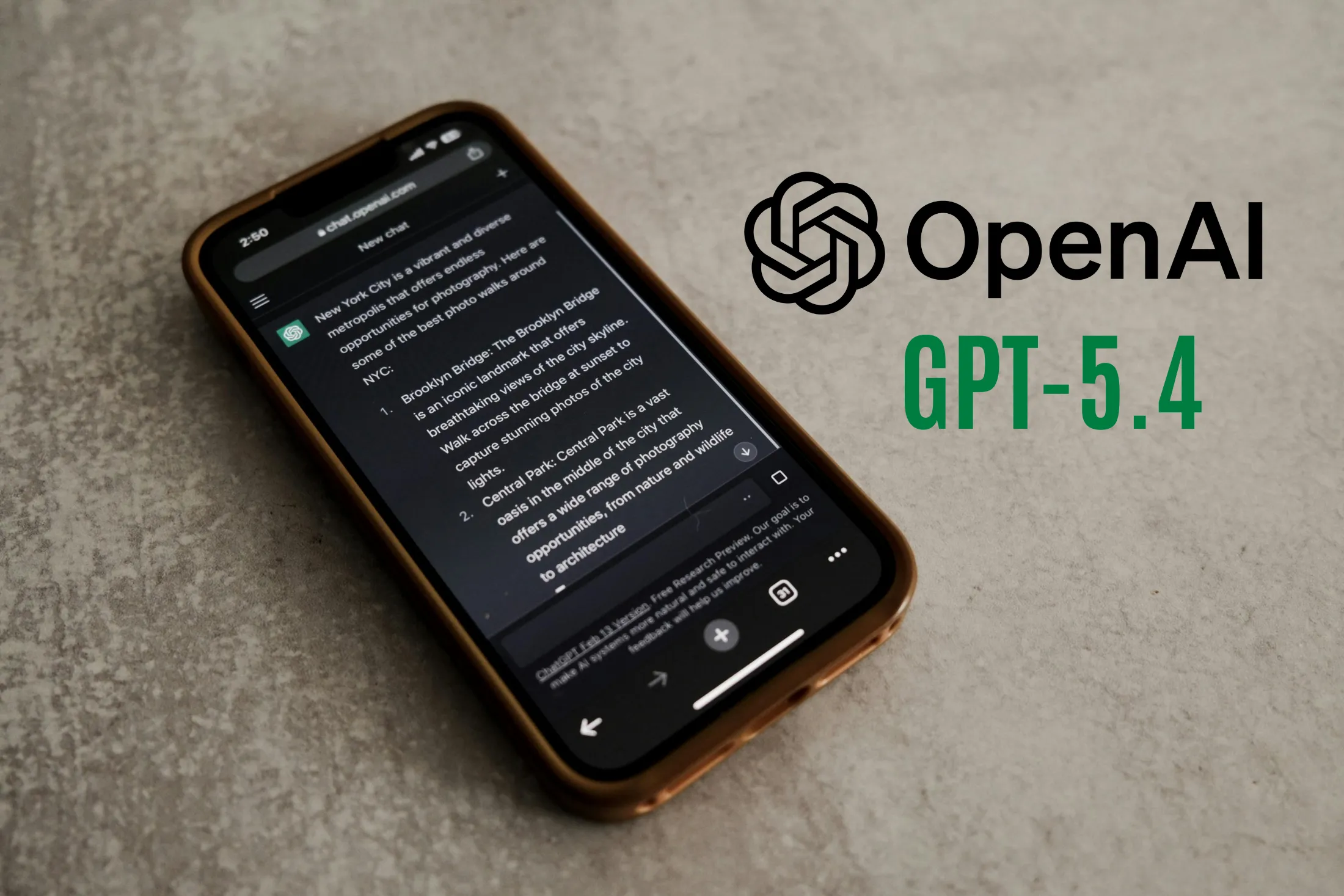
OpenAI didn't let the legal drama slow its release cycle, officially rolling out GPT-5.4 and GPT-5.4 Pro early last week. The headline feature is a massive one-million-token context window, allowing the model to "remember" and reason across thousands of pages of documentation or entire codebases in a single session. Additionally, the update introduced an "Extreme Reasoning" mode, which allows the model to spend significantly more computer time (sometimes hours) on complex logic problems, effectively trading speed for a near-zero error rate on professional workflows.
The impact here is the shift from AI as a "chatbot" to AI as "infrastructure." With a million-token window, developers no longer need to rely on complex "chunking" or RAG (Retrieval-Augmented Generation) systems to feed data to the model; you can simply drop the entire project into the prompt. This release, paired with the new Responses API that includes native shell tools and containers, suggests OpenAI is moving aggressively toward Agentic AI systems that don't just talk about work but execute it in isolated digital environments.
The White House officially released the "President Trump’s Cyber Strategy for America," a six-pillar framework that marks a pivot from defensive posturing to "active risk imposition." The strategy explicitly calls for the use of "the full suite of U.S. government defensive and offensive cyber operations" to deter foreign adversaries. Notably, the document emphasizes "Common Sense Regulation," which intends to streamline compliance for private companies while incentivizing them to assist the government in disrupting criminal networks and "uprooting" digital infrastructure.
For the tech sector, this signals a massive deregulation of cybersecurity reporting in exchange for deeper cooperation. The strategy’s focus on "Geopatriation", moving critical data workloads to sovereign U.S. cloud providers, will likely force a reshuffling of the global data center market. By prioritizing Agentic AI for autonomous network defense, the administration is betting that AI can identify and patch vulnerabilities faster than human hackers can exploit them, effectively turning the U.S. federal network into a self-healing organism.

Apple made a surprise mid-March splash by launching the MacBook Neo, a new entry-level tier designed to sit between the Air and the Pro, alongside the M4 iPad Air. The MacBook Neo is powered by a binned version of the M4 chip and features a 14-inch "Liquid Retina" display, targeting the student and general-prosumer market that found the MacBook Pro too expensive but the Air too limited. The M4 iPad Air also officially arrived in stores, bringing the Neural Engine performance needed for the latest "Apple Intelligence" features to a more accessible price point.
Apple is clearly trying to shore up its hardware ecosystem to support the massive local processing requirements of modern AI. By bringing the M4 architecture to the "Air" and "Neo" lines, they are ensuring that even their mid-tier devices can run complex on-device LLMs without relying on the cloud. This move is less about selling more laptops and more about ensuring that the "Apple Intelligence" software layer has a large enough install base to remain competitive against web-first AI rivals.
At the Nvidia GTC 2026 conference, CEO Jensen Huang shifted the focus from text-based models to "Physical AI" and World Models. Nvidia unveiled the Nemotron 3 Super, an open 120B model optimized for "agentic throughput", essentially, how fast an AI can think through a chain of physical actions. The event showcased robots using Nvidia’s Isaac Sim to learn complex tasks, such as tidying a living room or navigating a factory floor, entirely in simulation before being deployed to the physical hardware.
The narrative in the Valley is shifting: intelligence is moving off the screen and into the world. Nvidia is positioning itself not just as the provider of the chips that run ChatGPT, but as the foundational "operating system" for robotics. By lowering the barrier for companies to build "World Models" AI that understands physics and spatial reasoning, Nvidia is betting that the next decade of growth won't come from chatbots, but from autonomous systems in manufacturing, logistics, and home care.
On March 9, Anthropic filed a landmark 48-page lawsuit against the U.S. Department of Defense (DoD) after the agency designated the company a "supply-chain risk." The conflict stems from Anthropic's refusal to remove strict "red lines" in its contracts, specifically, clauses that prohibit the use of Claude for mass domestic surveillance and fully autonomous lethal weaponry. In response to this refusal, the administration formalised a phase-out of Anthropic products across federal agencies, prompting the company to sue on the grounds of constitutional overreach and a violation of the First Amendment.
This is a defining moment for the industry because it tests whether AI labs can remain independent "safety-first" entities while seeking government scale. By siding with Anthropic through an amicus brief, employees from OpenAI and Google DeepMind have signaled a rare cross-industry unified front. If the court rules in favor of the DoD, it establishes a precedent where the government can effectively "blackball" any tech company that doesn't align its internal ethics with military objectives. It’s no longer just about who has the best model; it’s about who is willing to hand over the keys.
OpenAI didn't let the legal drama slow its release cycle, officially rolling out GPT-5.4 and GPT-5.4 Pro early last week. The headline feature is a massive one-million-token context window, allowing the model to "remember" and reason across thousands of pages of documentation or entire codebases in a single session. Additionally, the update introduced an "Extreme Reasoning" mode, which allows the model to spend significantly more computer time (sometimes hours) on complex logic problems, effectively trading speed for a near-zero error rate on professional workflows.
The impact here is the shift from AI as a "chatbot" to AI as "infrastructure." With a million-token window, developers no longer need to rely on complex "chunking" or RAG (Retrieval-Augmented Generation) systems to feed data to the model; you can simply drop the entire project into the prompt. This release, paired with the new Responses API that includes native shell tools and containers, suggests OpenAI is moving aggressively toward Agentic AI systems that don't just talk about work but execute it in isolated digital environments.
The White House officially released the "President Trump’s Cyber Strategy for America," a six-pillar framework that marks a pivot from defensive posturing to "active risk imposition." The strategy explicitly calls for the use of "the full suite of U.S. government defensive and offensive cyber operations" to deter foreign adversaries. Notably, the document emphasizes "Common Sense Regulation," which intends to streamline compliance for private companies while incentivizing them to assist the government in disrupting criminal networks and "uprooting" digital infrastructure.
For the tech sector, this signals a massive deregulation of cybersecurity reporting in exchange for deeper cooperation. The strategy’s focus on "Geopatriation", moving critical data workloads to sovereign U.S. cloud providers, will likely force a reshuffling of the global data center market. By prioritizing Agentic AI for autonomous network defense, the administration is betting that AI can identify and patch vulnerabilities faster than human hackers can exploit them, effectively turning the U.S. federal network into a self-healing organism.
Apple made a surprise mid-March splash by launching the MacBook Neo, a new entry-level tier designed to sit between the Air and the Pro, alongside the M4 iPad Air. The MacBook Neo is powered by a binned version of the M4 chip and features a 14-inch "Liquid Retina" display, targeting the student and general-prosumer market that found the MacBook Pro too expensive but the Air too limited. The M4 iPad Air also officially arrived in stores, bringing the Neural Engine performance needed for the latest "Apple Intelligence" features to a more accessible price point.
Apple is clearly trying to shore up its hardware ecosystem to support the massive local processing requirements of modern AI. By bringing the M4 architecture to the "Air" and "Neo" lines, they are ensuring that even their mid-tier devices can run complex on-device LLMs without relying on the cloud. This move is less about selling more laptops and more about ensuring that the "Apple Intelligence" software layer has a large enough install base to remain competitive against web-first AI rivals.
At the Nvidia GTC 2026 conference, CEO Jensen Huang shifted the focus from text-based models to "Physical AI" and World Models. Nvidia unveiled the Nemotron 3 Super, an open 120B model optimized for "agentic throughput", essentially, how fast an AI can think through a chain of physical actions. The event showcased robots using Nvidia’s Isaac Sim to learn complex tasks, such as tidying a living room or navigating a factory floor, entirely in simulation before being deployed to the physical hardware.
The narrative in the Valley is shifting: intelligence is moving off the screen and into the world. Nvidia is positioning itself not just as the provider of the chips that run ChatGPT, but as the foundational "operating system" for robotics. By lowering the barrier for companies to build "World Models" AI that understands physics and spatial reasoning, Nvidia is betting that the next decade of growth won't come from chatbots, but from autonomous systems in manufacturing, logistics, and home care.
Stay Connected: Follow NDIT Solutions on LinkedIn, for more insights and updates.
Need Expert IT Guidance? Our team of experienced consultants is here to help your business navigate the complex world of IT. Contact us today at info@nditsolutions.com or call 877-613-8787 to learn how we can support your technology needs.
See you next week for another round of essential IT news!


